
Understanding Emotional Dysregulation
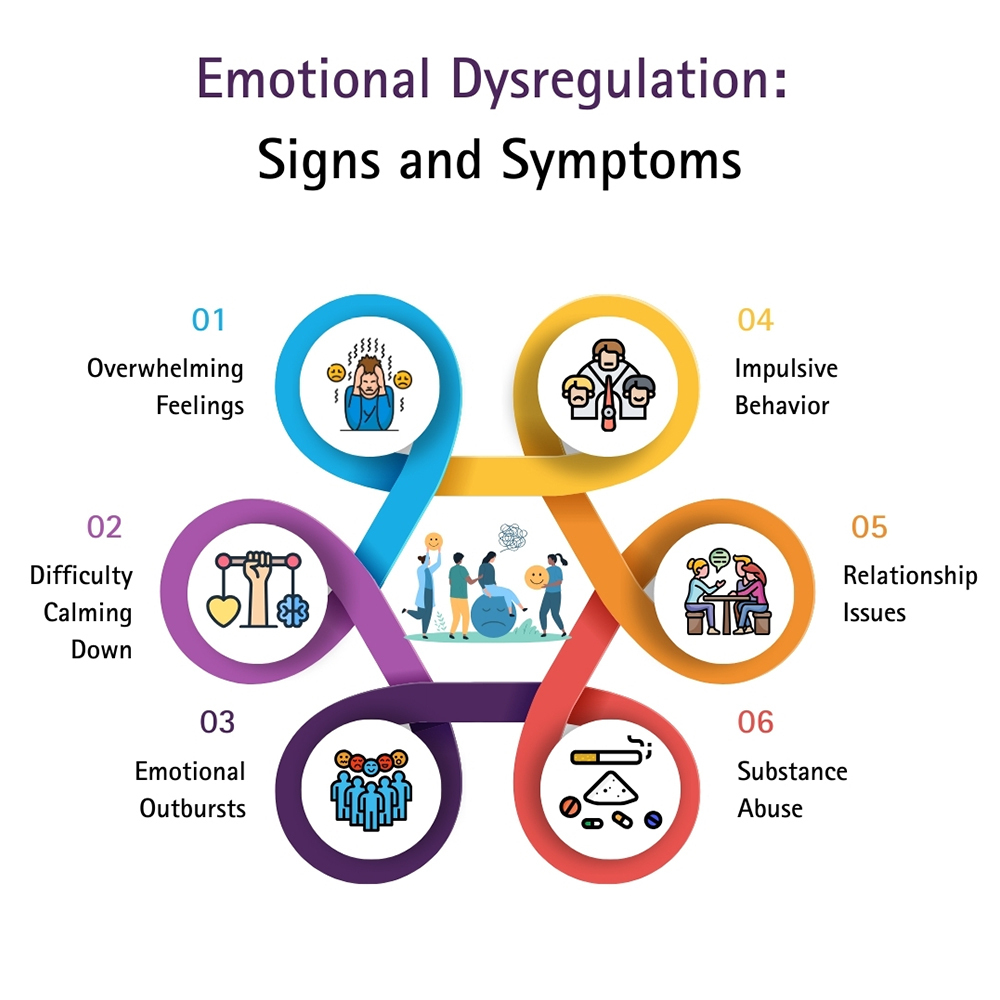
Emotional dysregulation is a symptom of trauma or stressful experiences that impacts how a person manages their emotions. Individuals with emotional dysregulation tend to experience their feelings intensely, which can result in relationship issues, avoidance behaviors, harmful actions, and impulsivity.
Our therapists use the Sovereign Body Method to help you find more safety within your body and feel grounded and confident in expressing your emotions.
Symptoms
Common symptoms of emotional dysregulation include:
- Feeling on edge or easily triggered
- Shutting down, snapping, or withdrawing
- Emotions escalating quickly
- Feeling consumed by emotions
- Taking a long time to return to baseline after intense emotions
- Avoiding or disconnecting from emotions
- Overreacting to minor events
- Inability to see solutions
Long-term untreated emotional dysregulation can cause our system to be overwhelmed and lead to things like anxiety, depression, and difficulties in relationships. Emotional dysregulation can also occur alongside Somatic symptom disorder, or Seasonal affective disorder (SAD).
The goal isn’t to stop feeling emotions; it’s to receive useful information about what is important to you from your emotions and allow them to pass. With the Sovereign Body Method, you can feel your emotions without becoming consumed by them, distracting yourself, or automatically responding.
Prolonged stress can cause emotional dysregulation. When we go through difficult situations, our body releases adrenaline and cortisol to help us respond. But chronic stress can condition our nervous system to stay on high alert, making it harder to return to calm. This can make our brain respond to perceived danger as real.
For some people, simply learning regulation skills in calmer environments can help them be less overwhelmed by emotions.
Call us for more information about our counselors or to schedule a complimentary consultation.
(786) 522-2376Treatment for Emotional Dysregulation
At Evolve, treatment for emotional dysregulation goes further than giving you coping skills to use when you are overwhelmed. We help you change how your body responds to stress, allowing you to handle difficult emotions without losing control.
Our therapists use the Sovereign Body Method, a four-phase framework that combines nervous system regulation, somatic therapy, and other evidence-based cognitive interventions.
How Our Approach Works
Phase 1– Awareness & Reset: We begin by understanding your current challenges and identifying your goals. We teach you simple regulation tools you can use daily before approaching more difficult memories and experiences.
Phase 2– Feeling & Releasing: Once you have a foundation of tools, you will feel more grounded in your body and safer to move on to experiencing your emotions. In this phase, you will practice receiving important information from your feelings to allow them to guide you rather than reacting to them. This gives you more agency over how you experience your emotions.
Phase 3– Rewriting the Pattern: After you feel comfortable experiencing emotions and letting them go, you can challenge negative thought patterns or beliefs, process trauma, or change patterns.
In this phase, we can incorporate evidence-based interventions such as:
- Somatic regulation: helps you learn how to relax the muscles of your body, which alleviates intense emotions
- Cognitive Behavioral Therapy (CBT): Helps you identify thoughts that lead to negative feelings and unwanted behaviors. Your therapist can then help you identify techniques to change your thoughts, which will, in turn, change your feelings and actions.
- Dialectical Behavior Therapy (DBT): A popular therapy for emotional dysregulation, helping clients learn skills to manage their emotions and tolerate distress.
- Schema therapy: Holds the belief that emotional dysregulation can come from maladaptive schemas developed in childhood. Schema therapy can help you change your narratives to help regulate your emotions or even treat disorders like narcissistic personality disorder.
Your therapist will recommend interventions and help you decide which one is best for you.
Phase 4– Self Leadership: In this phase, we continue working with the nervous system to help your body feel safer experiencing positive emotions and integrate more positive self-beliefs.
Results You Can Expect From Emotional Dysregulation Therapy
With therapy for emotional dysregulation, you will be able to:
• Experience strong emotions without reacting to them or shutting down
• Communicate more effectively
• Recover from emotions faster rather than being distressed all day
• Express your needs before resentment builds
• Set healthy boundaries
• Cope with disappointment without jeopardizing relationships
• Handle stressful situations more confidently
The goal of emotional dysregulation therapy is to experience your emotions and respond intentionally, rather than impulsively or shutting down.
Treatment Duration
During your first session, you will get actionable steps you can take to start working on your goals outside of session.
However, therapy is not about the duration, but about making sustainable, lifelong changes.
Some things that can affect how long emotional regulation therapy takes include:
- Complexity of your emotional regulation difficulties
- Your individual treatment goals
- Consistency in practicing regulation techniques in between sessions
- How long you’ve been stressed and the effect it’s had on you
The focus is learning practical skills you can use in daily life and attaining the self-trust to confidently make the right decisions for you, not relying on therapy.
Medications
Medications may help treat emotional dysregulation depending on your diagnosis, symptoms, and individual circumstances. Talk to your medical provider to see whether medication can help.
Specializing in Treating Emotional Dysregulation
At Evolve, your emotional dysregulation therapy is:
- Provided by master’s-level licensed and registered therapists, personally selected and trained by our founder, Liz Chelak, in The Sovereign Body Method, with ongoing clinical guidance and supervision.
- Structured to go beyond venting and validation, with practical tools and practices you can implement daily to become a calmer, more grounded, and more assured version of yourself.
- Personalized based on your goals and preferences.
- Available in Miami, West Palm Beach, and virtually across Florida.
If you are ready to begin emotional dysregulation therapy, book a complimentary consultation today to get matched with a therapist.