
What Is Complex Trauma?
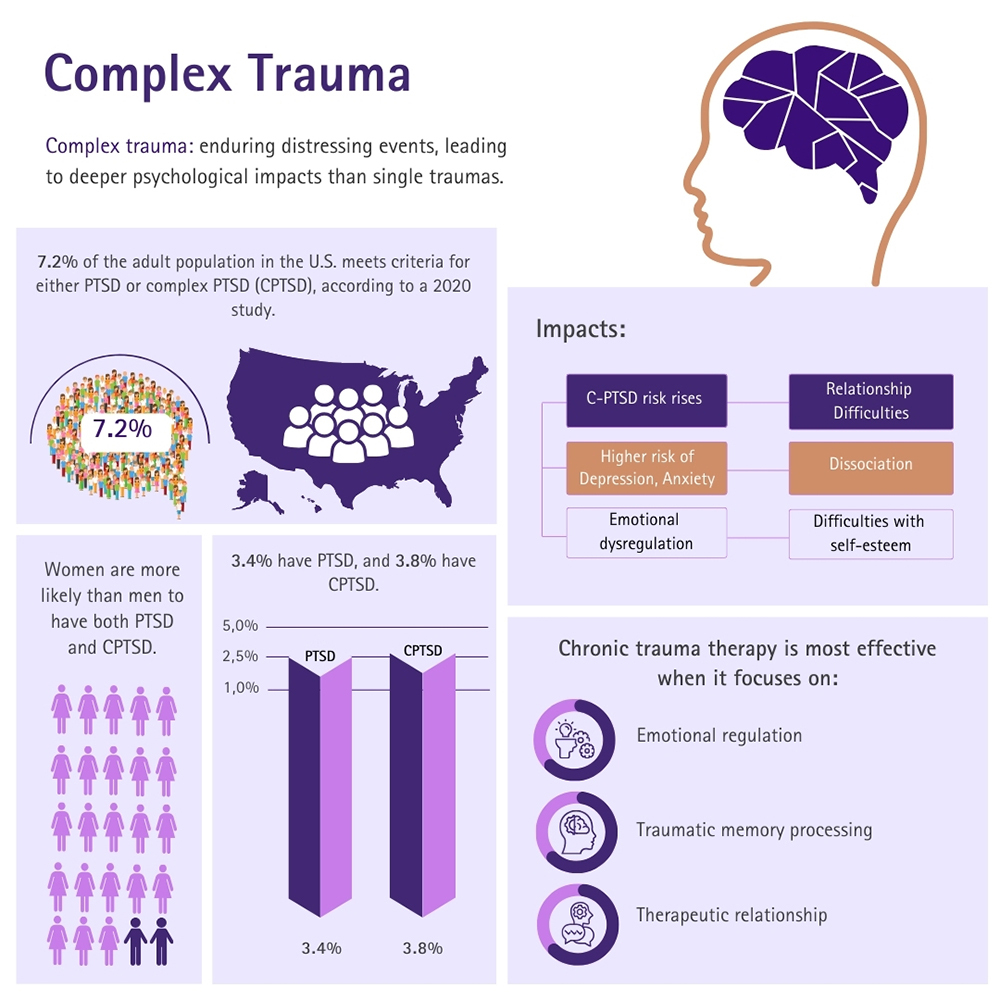
Complex trauma refers to the effects of experiencing multiple traumatic experiences or living in a traumatic situation for an extended period of time. These repeated exposures often lead to more psychological impacts compared to a one-time traumatic event.
Repeated trauma has a variety of psychological, emotional, and social impacts, such as:
- Higher likelihood of chronic post-traumatic stress disorder (C-PTSD)
- Increased risk of other mental health disorders, such as major depressive disorder, generalized anxiety disorder, personality disorders, and mood disorders
- Emotional dysregulation
- Dissociation
- Difficulties with self-esteem
- Self-harm
- Relationship challenges
- Substance use disorders
Complex or chronic trauma typically involves interpersonal violence, abuse, neglect, or betrayal by caregivers or significant others. Unlike single-event trauma, complex trauma occurs regularly and has substantial effects on development and one’s sense of self.
Post-traumatic stress disorder (PTSD) is a common response to trauma. Both acute and complex trauma have the same propensity for PTSD.
lifeline in my darkest moments ★ ★ ★ ★ ★
Liz’s expertise in complex trauma provided a lifeline in my darkest moments. Her compassionate approach and specialized techniques guided me toward healing. With her support, I learned to navigate the complexities of my past.
Effects of Chronic Trauma
Chronic trauma has many effects, such as:
- Mental health disorders: These can include depression, anxiety, C-PTSD, and others
- Emotional dysfunction: People may experience intense negative emotions, mood swings, and difficulty expressing their emotions
- Physical health issues: Trauma can also cause health problems such as hypertension, asthma, chronic pain, gastrointestinal issues, cardiovascular problems, and immune system problems
- Cognitive impairment: Chronic trauma can affect an individual’s memory and cognition
- Relationship problems: Chronic trauma makes having trusting relationships with others difficult.
- Negative self-esteem: Trauma comes with negative feelings, especially about oneself. Feelings of worthlessness, shame, guilt, and self-blame, and struggle with a distorted self-image are common.
At Evolve Therapy & Counseling, our therapists use the Sovereign Body Method to ensure a high standard of care for all our clients. This four-phase method guides our clients through all the necessary components to not only heal trauma, but step into a new identity from which you can build the life you want.
Embrace Healing The Power of Trust in Therapeutic Relationships
“In my experience, the most effective aspect of therapy is the therapeutic relationship. Establishing trust between a client and clinician is the first step to healing.”
Examples of Complex Trauma
Complex trauma refers to repeated traumatic experiences.
Some examples include:
- Childhood neglect or abuse
- Domestic violence
- Homelessness
- Community or gang violence
- Discrimination, racism, or sexism
- War
Complex trauma can refer to multiple different traumatic experiences in your life, or living in an abusive household with the same trauma happening over and over.
What Does Complex Trauma Feel Like?
 Complex trauma can feel like the world is a dark and evil place. You feel empty inside and depressed. It feels lonely and like no one truly understands you. You feel trapped inside a prison of your mind. You feel ashamed for not being able to get yourself out of it. Like you have no control over your life. You feel helpless and lost.
However, it is important to remember that there is help. Our therapists specialize in helping their clients heal from complex trauma issues. Our founder, Liz Chelak, LCSW, CCTSI, CRPS has personal experience with overcoming her complex trauma and helping hundreds of people do the same. This is why she created her method- to make sure clients have the experience of being seen and cared for.
Chronic Trauma Therapy
According to a study in PubMed, chronic trauma therapy is most effective when it focuses on:
- Emotional regulation
- Traumatic memory processing
- Therapeutic relationship
This study showed that medication can also help decrease the effects of chronic trauma; however, it is not as effective as traditional talk therapies.
Using the Sovereign Body Method, our clients have access to skills and processes that help them reconnect with themselves to feel more grounded and confident after chronic trauma. After therapy, our clients feel they can handle a wider range of emotions and trust themselves to handle challenging situations.
Duration of Therapy for Chronic Trauma
The duration of therapy depends on the agreement between you and your therapist. There is no fixed timeline for chronic trauma therapy. It is important to remember that chronic trauma can come with deeply embedded negative core beliefs, therefore therapy can be long-term.
Some people can go through the method in a couple of months, while others choose to continue therapy after reprocessing traumatic events. Therapy can take clients further than just healing. It can be an ongoing experience of meeting with yourself and growing. Our counselors are here for you for as long as you’re willing to show up.
How to Find the Right Therapist for Chronic Trauma?
The right therapist for chronic trauma is not necessarily someone who specializes in working with your specific traumatic event, but someone who has personal experience coupled with education and training in trauma therapy. The best trauma therapist is someone who has not only studied effective methods of treatment but also has gone through the experience of healing themselves.
Emerge from the shadows of complex trauma with the dedicated support of our expert therapists in Brickell, Downtown Miami, and West Palm Beach. Uncover the strength within you, equipped with the tools of chronic trauma therapy. Take the first step towards your transformative journey by reaching out to us today.