
Our therapists use a structured four-phase approach to help you regulate your nervous system, increasing your ability to engage in social settings. The Sovereign Body Method is designed to help you feel safe in your body, enabling you to be more grounded and confident through body-based techniques.
Understanding Social Anxiety Disorder (Social Phobia)
Social anxiety is a common, disabling, and treatable mental health condition characterized by fear or excessive worry about being in social situations. People with this disorder have a fear of being judged, embarrassed, or humiliated by others. To be considered a mental health diagnosis, the fear must be more significant and debilitating than normal nervousness associated with social situations.
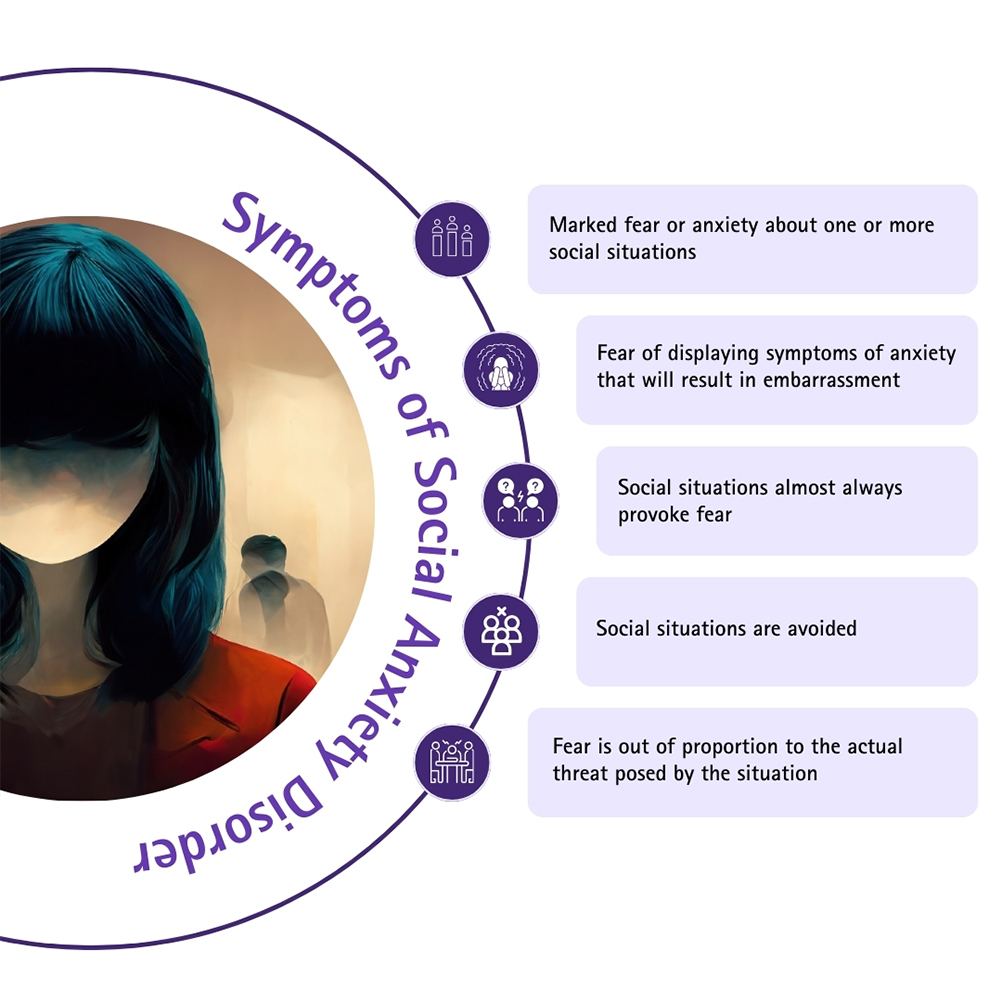
According to the Diagnostic and Statistical Manual (DSM-5), symptoms of social anxiety disorder include:
- Marked fear or anxiety about one or more social situations
- Fear of displaying symptoms of anxiety that will result in embarrassment
- Social situations almost always provoke fear
- Social situations are avoided
- Fear is out of proportion to the actual threat posed by the situation
To be diagnosed with social anxiety disorder, or social phobia, the fear and anxiety must last for over 6 months and cause significant impairment to work, social life, or other areas of functioning.
Types of Social Anxiety
 Types of social phobias include:
- Performance anxiety: This is the fear of speaking in front of others such as a speech, presentation, or stage performance.
- Academic anxiety: This often presents when an individual has to take a test or participate in class in front of other people.
- Dating/relationship anxiety: This involves the fear of dating, relationships, or intimacy with others.
- Interpersonal anxiety: This form is more common as it has to do with a fear of having conversations, meeting new people, maintaining eye contact, or making new friends.
It is possible to live with more than one type of social phobia. When you speak with a therapist, you can better understand which type of social anxiety you are experiencing. Your trauma therapist will help you learn coping skills and identify strategies to reframe your thoughts to alleviate your symptoms.
Causes of Social Anxiety Disorder
Social anxiety disorder can be caused by several factors, including:
- Genetics: If someone in your family experiences anxiety, it is more likely that you will experience symptoms as well.
- Nervous system conditioning: Prolonged stress leads to an increase in cortisol levels, which can result in anxiety.
- Environment: Our environment plays a large role in our feelings, perceptions, and experiences.
- Brain chemistry: Anxiety can be caused by imbalances in neurotransmitters such as serotonin and norepinephrine.
- Social learning: At times, our behaviors and even emotions can be learned and mirrored from our caregivers.
While these are common causes that contribute to social anxiety, other factors may be present as well. Whatever the cause of your social anxiety, it is important to remember that you can work with your body to reduce distress from anxiety.
Diagnosing Social Anxiety Disorder
A therapist, counselor, psychologist, or psychiatrist can diagnose social anxiety disorder.
These mental health professionals may use the following methods to help them diagnose your condition:
- Interview: Your therapist will ask you questions about your current situation, as well as your history.
- Diagnostic criteria: Therapists will use the DSM-5 to match your symptoms to the disorder.
- Assessments: There are several standardized assessments therapists may use to identify if you have certain disorders.
Therapists have specific tools and education on all disorders, so it is important to seek help from a clinician to obtain a proper diagnosis.
Treatment for Social Anxiety Disorder
At Evolve Therapy & Counseling, our therapists utilize a structured, nervous system-based approach. When the nervous system is activated, we often lose access to our brain’s higher functions. That’s why all therapy begins with somatic (body-based) regulation. This process helps you establish a sense of safety and allows for a broader range of emotional experiences.
The Sovereign Body Method consists of four distinct phases, including:
- Somatic Regulation: This phase focuses on helping you feel safe in your body. It involves teaching your nervous system to recognize safety, which can be essential for emotional well-being.
- Somatic Experiencing: In this phase, you are encouraged to use your feelings as a source of guidance. Instead of letting your emotions control your life, you learn to acknowledge and process them constructively.
- Processing: Here, you can employ Cognitive behavioral therapy (CBT) or other interventions to release negative beliefs that may have formed due to past stressful experiences. This phase emphasizes understanding and shifting these limiting beliefs.
- Integration: The final phase involves recognizing patterns in your behavior. Once you have let go of the past, you can work on creating a new identity and the life you desire, focusing on how you want to move forward.
This method aims to help individuals achieve a sense of empowerment and well-being by addressing both emotional and behavioral aspects of their experiences.
Do I Need Therapy for Social Anxiety?
Some factors to consider when deciding on therapy include:
- Severity and duration of your symptoms: If your symptoms have been severe and long-term and other things have not been working, it may be time to seek a professional level of support.
- Emotional distress: If your symptoms are causing you emotional distress, therapy can only improve your symptoms.
- Desire for change: Sometimes your symptoms don’t need to get debilitating before you decide to work on changing your patterns.
- Avoidance of social situations: If you have been avoiding social situations and events due to your social phobia, therapy can help you learn techniques to begin socializing comfortably.
- Current emotional distress: Therapy can provide tools for coping with negative feelings and low self-esteem from social anxiety disorder.
Therapy doesn’t aim to “fix” problems, but instead provides a supportive environment where you can connect with your true self.
It’s about understanding how your body and nervous system respond to different challenges in life. The objective is to gain personal empowerment and self-awareness, so you can rely on your inner resources rather than depending on external factors or people for your well-being. Ultimately, it’s about fostering independence and enhancing your capacity to navigate life’s experiences.
Embrace Healing The Power of Trust in Therapeutic Relationships
“In my experience, the most effective aspect of therapy is the therapeutic relationship. Establishing trust between a client and clinician is the first step to healing.”
Medications Used to Treat Social Anxiety Disorder
Evolve Therapy & Counseling does not prescribe medications, but some of our clients work with psychiatrists in conjunction with therapy. We are happy to refer you to a holistic psychiatrist if you believe medication may be right for you.
Medications that are used to treat Social Anxiety Disorder include:
- Sertraline (Zoloft)
- Fluoxetine (Prozac)
- Paroxetine (Paxil)
- Venlafaxine (Effexor)
- Duloxetine (Cymbalta)
- Clonazepam (Klonopin)
- Lorazepam (Ativan)
- Gabapentin
Some other medications may include beta-blockers such as propranolol or monoamine oxidase inhibitors (MAOIs).
Risk Factors for Developing Social Anxiety
Some factors that influence the development of social anxiety disorder include:
- Genetics: Sometimes, if someone in your family lived with social anxiety or any other mental health condition, you would have an increased risk for that disorder.
- Brain chemistry: Imbalances in neurotransmitters such as serotonin and norepinephrine can cause social anxiety.
- Childhood experiences: Our early childhood experiences play a large part in our personality in later life. Trauma and adverse childhood experiences can put someone at higher risk for social anxiety disorder.
- Environment: A stressful environment can lead to social phobias. Growing up in a stressful environment, for example, parents who set unreasonably high expectations for their children can also lead to social anxiety disorder.
Other factors can increase the risk of developing social anxiety, such as cultural and social factors. Also, it’s important to note that all of these risk factors do not necessarily mean an individual will certainly develop social phobia disorder.
Call an experienced social anxiety therapist today!
(786) 522-2376Get Treatment for Social Anxiety
To find treatment for social anxiety take the following steps:
- Research: Look up different therapists online. You may consider the therapist’s experience, pricing, and insurance they accept, and don’t forget to trust your gut.
- Ask for referrals: You can ask friends, family members, or your primary care physician for a therapy referral.
- Read therapist profiles: Therapists often write short bios describing who they are, what is important to them, and their specialties.
- Consider reviews: Sometimes clients leave reviews about their therapists. Read through these, but remember to take them with a grain of salt.
- Ask for a consultation: Some therapists offer 10-minute consultations where you can ask questions about how they work and get to know them.
- Schedule a session: You will never find the right therapist for you without scheduling a session.
Finding treatment for social anxiety disorder may take some work, but it is an investment in your mental health and well-being.