
What Are the Types of Therapy?
All our therapists at Evolve Therapy & Counseling are trained in the Sovereign Body Method, which is a structured 4-phase framework for therapy that takes clients through nervous system regulation, somatic work, and changing harmful patterns.
The goal of the method used at Evolve is to help clients:
- Gain self-trust
- Increase nervous system safety
- Increase authenticity
- Increase emotional flexibility
- Improve their relationship with themselves
- Live their lives fully
We hope for our clients to be self-sufficient in knowing what is right for them and confident in making the right decisions for themselves, instead of relying on outside sources.
Within the method, therapy can include the following evidence-based interventions:
- Eye movement desensitization and reprocessing (EMDR)
- Cognitive behavioral therapy (CBT)
- Dialectical behavioral therapy (DBT)
- Art and music therapy
- Somatic therapy
- Psychodynamic therapy
- Emotional focused therapy (EFT)
- Narrative exposure therapy (NET)
- Internal family systems therapy
- Cognitive processing therapy (CPT)
- Accelerated resolution therapy (ART)
- Individual therapy
- Brainspotting
- Brief eclectic psychotherapy (BEP)
- Inner child work
- Imagery rehearsal therapy (IRT)
- Instinctual trauma response therapy (IRT)
Our therapists are highly trained and experienced in a variety of therapies, including trauma therapy interventions, enabling us to create individualized treatment plans to address your specific needs and goals.
How Therapy Works at Evolve
Phase One
At Evolve, therapy starts with nervous system regulation. Nervous system dysregulation could be leading to many symptoms such as anxiety, exhaustion, digestive trouble, people pleasing, brain fog, overworking, and more. We believe our clients benefit from learning how to recognize and influence their nervous system state. This also helps you move more safely through the next phases of therapy.
Phase Two
After you feel more grounded in your body, we begin increasing somatic awareness to help you recognize how emotions show up in your body, what information they are providing you, and then we let go of the emotions so they are not stored longer than necessary.
Phase Three
This is where you begin to process and change your patterns. The specific intervention you use depends on you, your situation, and preferences. Your therapist can give recommendations on which therapeutic intervention would be beneficial for you and provide information on each so you can make an informed decision. The interventions are tools used within the framework.
Phase Four
After you feel more regulated and have processed your patterns and traumatic memories, the next step is to help you feel safe with positive emotions and experiences as well. Here, you and your therapist work with your nervous system to stop self sabotaging and develop positive self beliefs.
What Is Trauma Therapy?
Trauma therapy is a specialized form of psychotherapy used to help individuals who have experienced traumatic events overcome the negative emotional and psychological effects of trauma.

Some important aspects of trauma therapy include:
- Safety and confidentiality
- Evidence-based interventions
- Nervous system regulation
- Somatic therapy
- Emotional regulation
- Trauma reprocessing
- Psychoeducation
- Holistic approach
- Therapeutic relationship
Our therapists at Evolve Therapy & Counseling offer comprehensive psychotherapy services, specializing in trauma healing to help you regain a sense of control, function more effectively in daily life, improve your relationships, and achieve your goals.
Our approach is informed by the work of leading psychology researchers such as Gabor Mate and Peter Levine, integrating mind and body practices.
The epitome of an exceptional therapist ★ ★ ★ ★ ★
Restless worries vanish, replaced by a sense of normalcy and clarity that empowers me to confidently tackle any challenge. With my therapist by my side, there is nothing I cannot conquer.
Embrace Healing The Power of Trust in Therapeutic Relationships
“In my experience, the most effective aspect of therapy is the therapeutic relationship. Establishing trust between a client and clinician is the first step to healing.”
What Can Trauma Therapy Help With?
Therapy can help with a wide range of issues, including:
- Anxiety
- Depression
- Substance use disorders
- Relationship problems
- Self-harm
- Eating disorders
- Grief
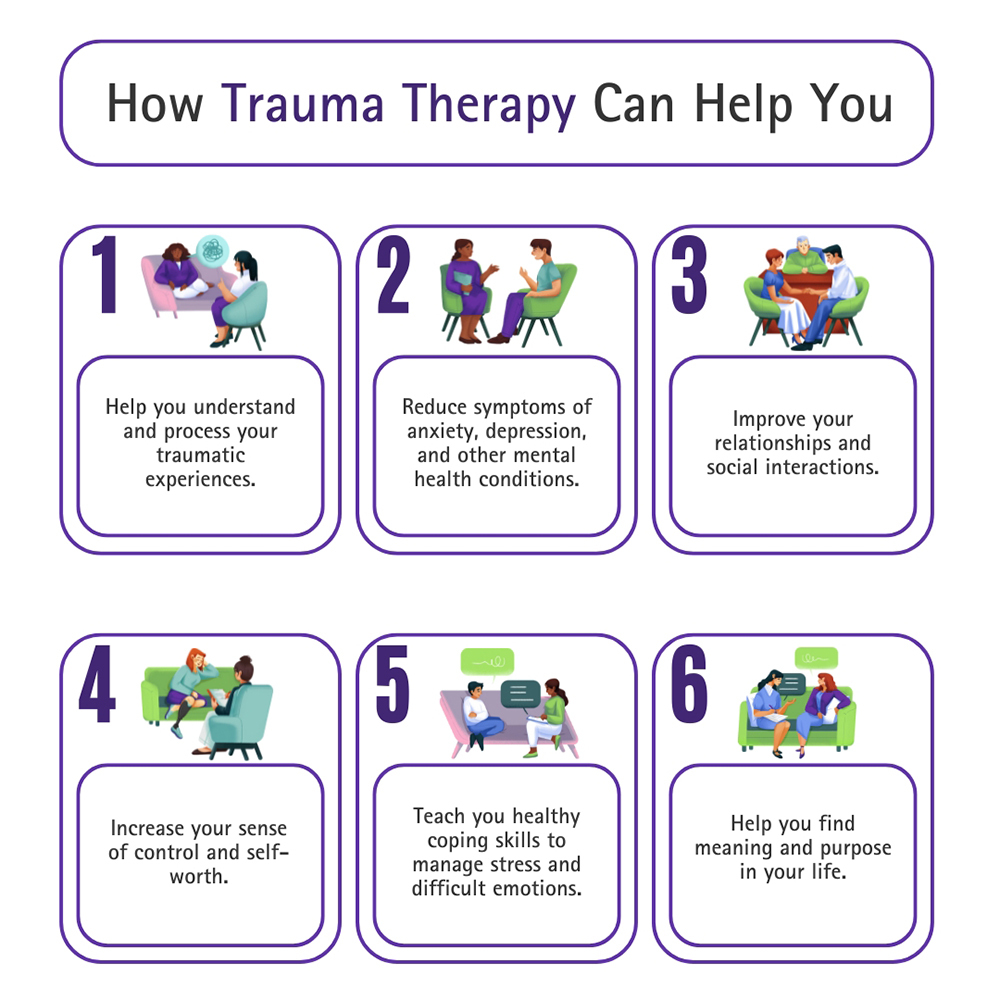
After therapy, you will feel relief from your negative emotions and experiences. Healing past trauma allows you to move forward to create a life you desire. You will feel calm, confident, and grounded regardless of outside people and circumstances. Therapy gives our clients the power to take control of their lives.
What Are the Benefits of Therapy?
The benefits of trauma therapy include:
- Emotional regulation– You may begin to feel less controlled by your emotions, feel safer in your body, and recover from stressful situations quicker.
- Self trust- You will begin to trust your body’s signals to make the right decisions for you without relying on other people’s opinions.
- Authenticity- You will begin to feel safe expressing yourself, your boundaries, and your desires more freely.
- Self compassion- You will learn how to treat yourself with kindness and be comfortable being yourself around others.
- Living fully- You will work on making choices that align with your life and experiencing joy without asking for permission.
Your counselor will tailor your therapy to your specific needs and goals. As long as you are honest about your experiences, thoughts, feelings, and concerns you can attain all the benefits of trauma therapy.
How Effective Is Trauma Therapy?
Progress could mean recovering faster after activation, making a decision without asking five people what they think, tolerating someone’s disappointment, recognizing a body response before it escalates, setting a boundary, allowing sadness without immediately escaping it, or choosing differently in a familiar situation.
To track how therapy is working for you and to ensure we are going in the right direction we complete an assessment every 3 months to track your nervous system regualation, self trust, authenticity, and more. These scores are just for you and your therapist to track your progress and provide information on what is working and what can be improved on.
After therapy, our clients notice they are able to:
- Recover from activation quicker
- Have difficult conversations without shutting down
- Become less triggered around stressful people and situations
- Set boundaries
- Make a decision without needign reassurance
- Improve relationships by reducing people pleasing
- Experience more gratitude and positive emotions
Since we can’t always control what happens in life, the goal of therapy is to increase your window of tolerance for life experiences.
How Long Does Therapy Take?
The length of therapy depends on several factors, such as:
- The severity of your past trauma
- Willingness to try new skills learned in therapy
- Consistency with therapy
Some things you can do to get the most out of therapy include:
- Be honest with your therapist about your symptoms
- Maintain consistency with sessions
- Remain open about trying new things
It’s important to remember that therapy is about progress and that progress is not always linear. You may have setbacks. But your therapist will always be there to support you throughout the process.
How Do I Find a Therapist?
The best way to find a therapist is first to identify what you are looking for in a therapist. Then, read about that therapist online. Consider their education, experience, personal values, and outlook on life. The most important part of finding the right therapist for you is to meet with someone. You want to feel safe and comfortable in the presence of your therapist.
If you are living with trauma or mental health symptoms, our therapists at Evolve Therapy & Counseling in Brickell, Miami and West Palm Beach can help. We use a structured framework coupled with the latest research-based interventions to help you heal from your trauma and reclaim your life. We will work with you to create a personalized treatment plan that meets your individual needs. Contact us today to learn more about our services and how we can help you on your journey to recovery.