
 Heroin addiction is not simply a matter of willpower, nor is it solely about the drug itself. It often serves as a coping mechanism for intense emotions, stress, and internal discomfort. At a certain point, using heroin stops being a choice; individuals may no longer experience a high and begin using just to avoid withdrawal symptoms.
Our team of therapists follows a four-phase method that is designed to help clients recalibrate their nervous system and make decisions from a grounded, confident place.
Within this method, our counselors can use standard therapy interventions such as:
- Rational emotive behavior therapy (REBT)
- Cognitive behavioral therapy (CBT)
- Eye movement desensitization and reprocessing (EMDR)
After completing detox and initial therapy to learn coping skills and methods to stop using drugs, therapy at Evolve can help you reconnect with yourself, reduce impulsive patterns, and feel more in control of your life.
Signs and Symptoms of a Heroin Addiction
The clinical term for heroin addiction is opioid use disorder. It involved patterns that are difficult to control and being to affect daily functioning.
Symptoms of opioid use disorder include:
- Opioids taken in larger amounts and for a longer time than intended
- Unsuccessful efforts to decrease the amount of opioids used
- A great amount of time and energy are spent on acquiring, using, and recovering from opioid use
- Strong urge to use
- Use of opioids resulting in failing to perform responsibilities at work, home, or school
- Continued use regardless of negative consequences
- Important work or social activities given up because of opioid use
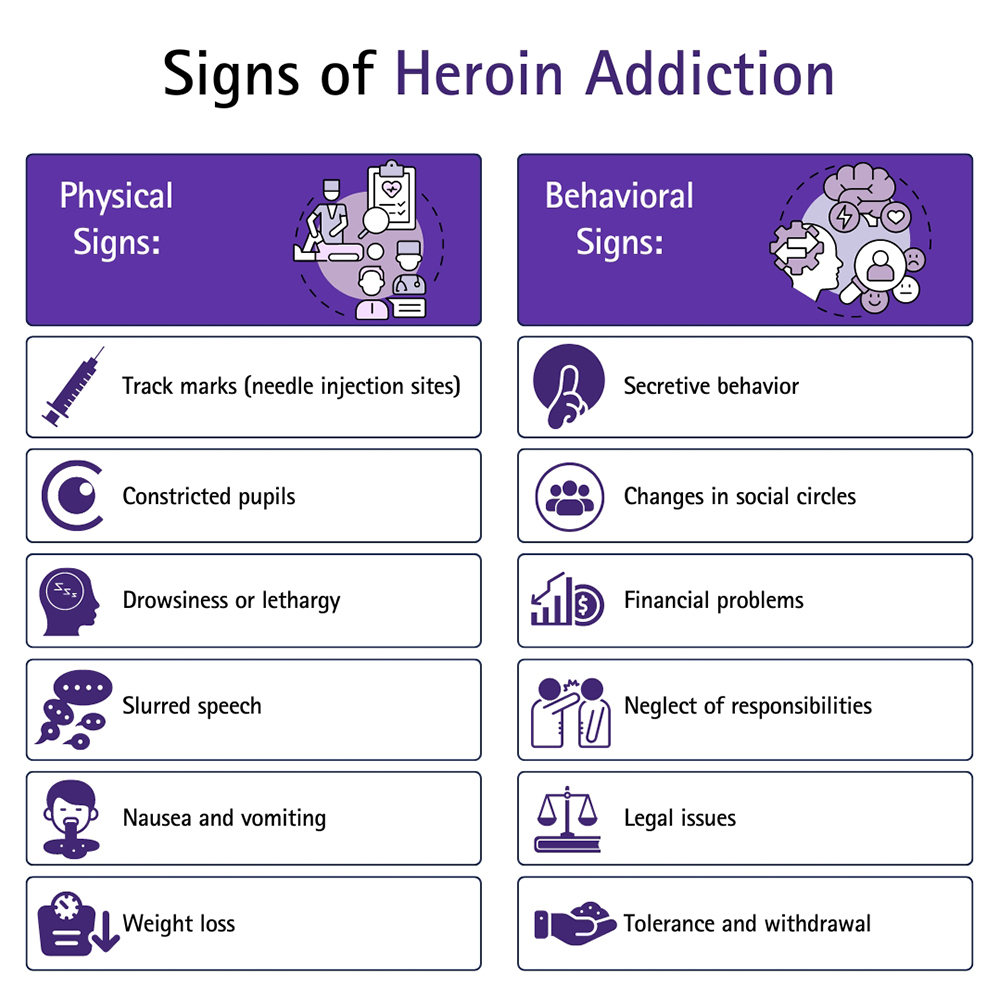
Some signs that can alert you of a heroin addiction include:
- Dilated pupils
- Weight loss
- Fatigue
- Runny nose
- Itchy skin
- Withdrawal from family and friends
- Increased financial problems
- Stealing or borrowing money
- Suicidal thoughts or behaviors
If you notice any signs and symptoms, it may indicate that you need additional support. Discontinuing heroin use is possible. We recommend starting with detox to help manage withdrawal symptoms, followed by attending an inpatient program. This will assist you in learning about your triggers and warning signs during the initial stages of recovery.
After completing the inpatient program, you can transition to therapy at Evolve, where you can continue your self-discovery and work on improving your life. Our goal is to help you create a fulfilling life free from opiates.
Risk Factors and Causes of Heroin Addiction
Heroin addiction is caused by both genetic and environmental factors. A family history of drug or alcohol addiction can increase the risk of a substance use disorder like heroin addiction.
Based on my personal and clinical experience, I believe that the use and addiction to heroin is a coping skill after trauma. When someone goes through an intense traumatic experience, their bodies and brains are overwhelmed. At times, substances, like heroin, are the only coping skill that is available to the individual. Learning healthy coping skills and forming connections with others in recovery are the pillars of heroin addiction recovery.
Signs It’s Time for Heroin Addiction Treatment
It’s time to seek help for quitting if you feel that there are many negative consequences from using heroin such as impact on your health, your relationships, or your overall happiness. The first step is getting detox. We will be here to support you when you’re ready to continue with therapy after safely stopping your use.
Heroin addiction therapy at Evolve focuses on:
- Learning how to manage the internal feelings that led you to use.
- Changing how your body responds to stress.
- Developing control over your emotions instead of reacting to them.
This work can only begin after you have stopped using heroin. This type of therapy can help you retrain your nervous system patterns, enabling you to build a life that doesn’t rely on heroin.
Types of Treatment Available for Heroin Addiction
Types of treatment available for heroin addiction include:
- Medication for opioid use disorder (MOUD): Also known as medication-assisted therapy (MAT), is a form of treatment that involves the combination of medication and psychotherapy. Medication is used to control withdrawal symptoms, minimize cravings, and reduce the risk of relapse. Psychotherapy addresses the underlying cause of addiction and helps clients develop healthy coping skills and practice self-love.
- Inpatient therapy: Inpatient therapy is an effective option at the beginning of opiate recovery, as clients receive full-time support and have limited access to the outside world, where they might encounter drugs.
- Groups: There are multiple types of support groups and professional group therapy. Support is a key feature in heroin addiction recovery.
At Evolve Therapy & Counseling therapy focuses on changing the underlying pattern that drives use- not just managing behavior.
The Benefits of Heroin Counseling
The benefits of heroin addiction therapy include:
- Freedom to live the life you want without substance dependence
- Improved relationships
- Improve decision-making and impulse control
- Decrease the negative emotions leading to drug use
- Remove the need for substance use
Real change occurs not only by stopping heroin use but also by understanding the reasons behind the initial use and overcoming them. It involves not letting your emotions control you and learning how to deal with the past experiences and feelings that contribute to your substance use.
If you or someone you know needs therapy after heroin use in Brickell, Downtown Miami, and West Palm Beach., contact us today to talk to one of our best therapists.