

At Evolve, we are deeply committed to helping our clients create meaningful change in their lives. Our approach emphasizes nervous system regulation to address the root causes of depression. Instead of concentrating on diagnoses and symptoms, we focus on helping you expand your capacity for life and cultivate a self-led approach.
Dysthymia
Signs and Symptoms
Persistent depressive disorder, or dysthymia, is a disorder characterized by low mood and hopelessness that lasts for a prolonged period. Compared to major depressive disorder (MDD), dysthymia involves more persistent but less severe symptoms of depression. Persistent depressive disorder is now in the Diagnostic and Statistical Manual (DSM-5) as a combination of what used to be chronic major depressive disorder and dysthymic disorder.
Symptoms of dysthymia include:
- Depressed mood for most of the day for at least 2 years
- Feelings of hopelessness
- Poor appetite or overeating
- Trouble sleeping or sleeping too much
- Low energy
- Low self-esteem
- Poor concentration
To be diagnosed with dysthymia, the individual must not be without symptoms for more than 2 months at a time.
Causes
Chronic depression doesn’t come from a single event. It usually develops over time due to life events and how the body learns to respond to those events in an attempts to cope.
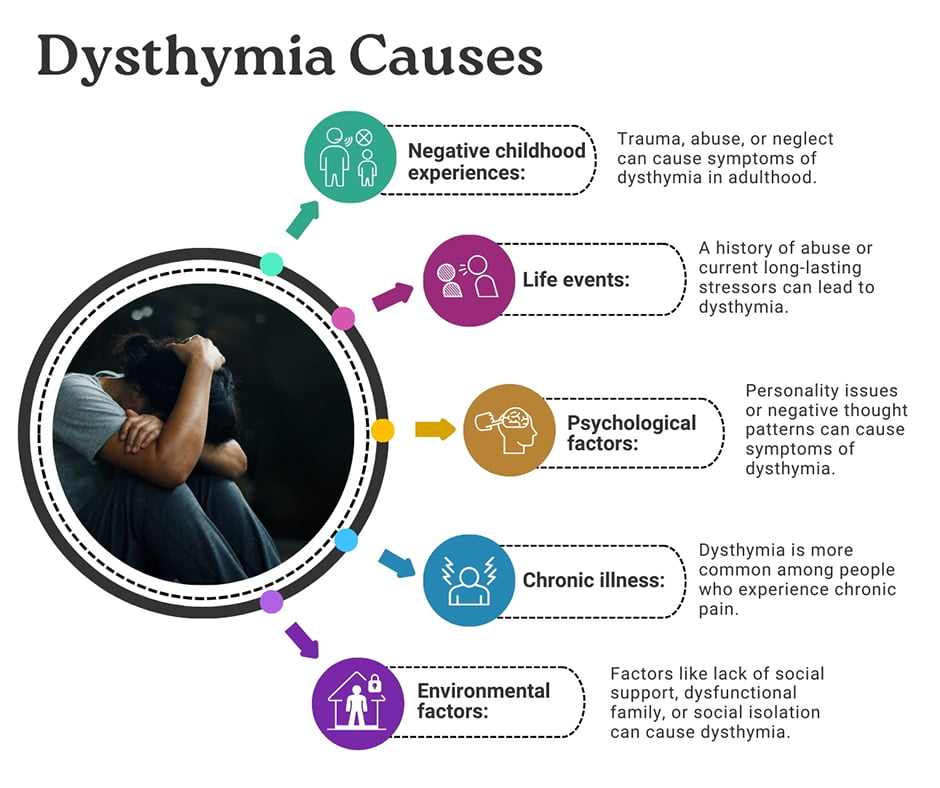
Dysthymia is caused by several factors, including:
- Negative childhood experiences: Trauma, abuse, or neglect can cause symptoms of dysthymia in adulthood.
- Longterm stress: For many people holding in emotional stress can lead to depressive symptoms.
- Life events: A history of abuse or current long-lasting stressors can lead to dysthymia.
- Psychological factors: Personality issues or negative thought patterns can cause symptoms of dysthymia.
- Chronic illness: Dysthymia is more common among people who experience chronic pain.
- Environmental factors: Factors like lack of social support, dysfunctional family, or social isolation can cause dysthymia.
Because chronic depression is shaped over time, it also requires an approach that goes beyond talking; one that helps the body and nervous system shift out of the freeze state.
Embrace Healing The Power of Trust in Therapeutic Relationships
“In my experience, the most effective aspect of therapy is the therapeutic relationship. Establishing trust between a client and clinician is the first step to healing.”
Diagnosing Dysthymia
Dysthymia can be diagnosed by a skilled trauma therapist. It is typically diagnosed based on the presence of long-term symptoms. A diagnosis is made when the individual experiences low or depressed mood for most of the time for two years, often accompanied by low energy, difficulty concentrating, low self-esteem, changes in sleep, and appetite.
Dysthymia is a common condition, with 2% of Americans living with the diagnosis. While dysthymia is not as well-known as major depressive disorder (MDD), if left unaddressed, it can have significant impacts on an individual’s life. Therapy or counseling can greatly improve your quality and satisfaction.
Dysthymia Treatment
At Evolve, we look beyond symptoms alone. We consider how your nervous system is functioning and help you regulate it back to your window of tolerance. This means therapy is more structured and goal-oriented.
We use the Sovereign Body Method developed by Liz Chelak, LCSW, CCTSI, CRPS- an approach that helps you find safety and reduce baseline tension. You will learn to process your emotions and negative beliefs, allowing you to enter a space where you can safely experience joy and pleasure.
Some options for treating dysthymia include:
- Psychotherapy: Once you feel you have the tools to regulate your emotions more effectively, talk therapies such as cognitive behavioral therapy (CBT) and rational emotive behavioral therapy (REBT) can be used.
- Medication: Research shows that medication has helped treat chronic depression, regardless of the brand. Evolve works closely with holistic psychiatric providers we would be happy to refer you to them when needed.
- Combination therapy: For many individuals, a combination of psychotherapy and medication works best.
- Social support: Support from family, friends, and loved ones is vital in the recovery of many disorders, dysthymia being one of them.
- Mindfulness and relaxation: Somatic regulation, or learning to relax the muscles in your body, can greatly improve mental health symptoms of dysthymia.
The best treatment goes beyond simply discussing your problems. It is an approach that helps you become self-led. Your therapist serves as a guide to help you connect with yourself, listen to your inner voice, and pay attention to the important messages from your body. This approach ensures that you live an authentic life true to yourself, rather than conforming to what might be right for someone else.
Medications for Chronic Depression
Some medications that are used to treat chronic depression include:
- Selective serotonin reuptake inhibitors (SSRIs): These include Zoloft, Prozac, Lexapro, and Paxil, which all act to increase serotonin levels. Serotonin is a neurotransmitter that regulates mood, sleep, appetite, and pain sensation.
- Serotonin-norepinephrine reuptake inhibitors (SNRIs): These include Effexor and Cymbalta, which increase both serotonin and norepinephrine. Norepinephrine works on the fight-or-flight response. Increasing levels of neurotransmitters and hormones improve alertness, energy levels, and focus.
- Tricyclic antidepressants (TCAs): Some examples of TCAs include Elavil and Tofranil. These medications work similarly to SNRIs by working on serotonin and norepinephrine but may have more side effects.
- Monoamine oxidase inhibitors (MAOIs): Examples of these medications are Nardil and Parnate. MAOIs work by inhibiting the enzyme monoamine oxidase, which breaks down neurotransmitters like serotonin and norepinephrine.
- Atypical antidepressants: They are also known as Wellbutrin and Remeron and work by modulating dopamine, norepinephrine, and serotonin.
If you are considering medication for your dysthymia symptoms, talk to your psychiatrist about these different medications, as well as their side effects.
Natural Treatments for Major Depressive Disorder
Natural treatments can be highly effective for depression. Evolve therapists and counselors can help you learn to naturally improve your depressive symptoms.
Some natural remedies for depression include:
- Physical activity: Any physical activity is good for our mental health. If making it to the gym is not realistic for your lifestyle, try riding a bike or walking to the store down the block instead of driving. Remember, any physical movement is good for your body and brain.
- Nutrition: Studies have shown that our gut is as important, if not more than our brain in controlling our moods. Be mindful of what you eat and make sure to include proteins, healthy fats, fruits, and vegetables in your daily diet.
- Sleep: Sleep plays a vital role in cell regeneration and mental health. Getting 7-9 hours nightly is important for most adults.
- Meditation: Mindfulness and meditation can help relieve stress. Mindfulness-based cognitive therapy (MBCT) has been shown to decrease depression.
- Somatic regulation: Somatic regulation is learning to relax the muscles in your body. This can reduce stress and depression. Somatic regulation can be achieved through extending your exhale, progressive muscle relaxation, or other forms of relaxation using any of the five senses.
- Limit alcohol and caffeine: Decreasing your intake of these substances can improve your sleep, stabilize your mood, and improve depression.
All of these natural remedies for depression are excellent additions to evidence-based therapies. It is important to have both professional and social support in your depression recovery.
Finding Healthcare Providers for Depression Treatment
You can find healthcare providers for depression in various ways, including:
- Psychotherapists: A therapist is usually the first route in addressing and treating depression symptoms.
- Psychiatrists: Sometimes medication can help with depression treatment in conjunction with therapy.
You can find these healthcare providers by:
- Asking for a referral: You can ask your primary care physician (PCP) or ask friends or family members if they have received treatment for depression.
- Insurance: You can use your insurance website to find a healthcare provider who is covered by your insurance policy.
- Online platforms: You can search online platforms such as Psychology Today or SAMHSA to find a therapist.
Therapists at Evolve Therapy & Counseling use a structured nervous system-based approach. If you think this may be right for you, reach out today to schedule a complimentary consultation to learn more.
Therapy Duration for Chronic Depression
The duration of therapy is up to your willingness to participate in your treatment.
Some factors that may influence how long therapy lasts include:
- Response to therapy: Your progress and achievement of your treatment plan goals can dictate how long therapy takes.
- Your open-mindedness: How willing and open-minded you are in therapy will determine how long you want to participate in therapy.
- Preference: Some people wish to continue therapy to deal with day-to-day stressors, even after completing chronic depression therapy goals.
- Therapist approach: Different therapists may have their protocols for therapy, which may take different lengths of time.
It is not necessary to stay in therapy for life if you have chronic depression or dysthymia. The goal of therapy at Evolve is to learn how to use your body and emotions as a guide in making the best decisions for yourself.
In the journey to overcome chronic depression, remember that effective treatment is within your reach. By choosing evidence-based approaches like REBT, CBT, and EMDR, and the Sovereign Body Method you’re taking proactive steps towards a healthier mental state. Reach out to our experienced therapists today and learn more about what a structured approach to therapy can look like for you.